+49 (0)89 70065020



Conveyance, land charge caution and land registry entry simply explained: A guide for property owners and buyers

Conveyance, land charge caution and land registry entry simply explained: A guide for property owners and buyers
Acquiring real estate is a complex and often lengthy process. Especially for laypeople, it can be difficult to understand the many different steps and terms that arise during the purchase process. Three terms that are frequently mentioned and are of great importance are Auflassung, Auflassungsvormerkung, and Grundbucheintrag. The goal of this article is to provide an understandable explanation of these terms and processes to help real estate buyers and owners better understand the purchasing process and, above all, to know what steps are necessary to secure their property.
In Germany, it is necessary to carry out a notarization if you want to sell a property. In this article, which is part of an informative series, we examine the specific components of a real estate purchase agreement. In detail, they are: the parties involved and the purchased item, the purchase price, the seller's liability for defects, Transfer of possession, use, burdens, and risk, Costs and taxes.
Conveyance, land charge cautioning, and land register entry: The most important terms in real estate purchasing explained briefly and simply
The conveyance is an important term in real estate acquisition. It is a notarized contract between the buyer and seller that governs the transfer of ownership of a property. Without a conveyance, the transfer of ownership is not effective and the buyer has no legal basis to own the property.
The Cancellation caveat is an entry in the land register that protects the buyer from potential third parties who might assert claims to the property. It secures the buyer's right of first refusal as well as the right to acquire the property before other interested parties can do so. The Cancellation caveat is therefore an effective tool to secure the purchasing process.
The Land charge entry is ultimately the entry of the owner in the Land Register. The land register is a public registry that lists all property ownership rights. The land register entry is therefore of great importance, as it legally secures the owner and gives them the right to dispose of the property.
Overall, the conveyance, the priority notice of conveyance, and the land register entry are essential steps in acquiring real estate. They are closely linked and all serve to protect the buyer and seller and to make the transfer of ownership secure and legally binding. The purpose of this article is to make these complex terms and processes understandable in order to ensure a successful and secure transaction.
Conveyance through the ages: From open doors to notarized purchase agreements
The term conveyance Immovable property acquisition originates from property law and is found in the Civil Code. The unusual word conveyance goes back to a legal act from the Middle Ages. There are various accounts regarding the historical origin of the term. One of them states that the "Auflassung" (conveyance) originates from Germanic law. Back then, during the sale of a residential property, the gate or door was left open so that everyone could see the new or future owner. Another tradition states that there used to be no land registers and that seller and buyer handled the real estate sale directly with each other. As soon as the purchase was completed, the seller opened the windows and doors. Once the buyer closed them again, the handover was considered complete.
The notarized purchase agreement always includes a so-called. conveyance. The term may sound incomprehensible, but ultimately it is a Agreement between seller and buyer about the transfer of ownership. After signing the purchase agreement at the notary's office, the seller is still the owner of the property because they are in the Land Register registered. Here, there is a certain risk for the buyer, because the seller could deal with the property as they please.
Why is the conveyance (Auflassung) necessary when buying a property?
Simply put, buying a real estate property is about the buyer paying the agreed-upon price and the seller handing over the house and land in return. That sounds as though the notarized purchase agreement would be sufficient. However, German law has a special feature: a distinction is made between two types of transactions. On the one hand, there is the purchase agreement, which regulates who has what claims. On the other hand, there is the conveyance, which ensures that these claims are fulfilled. Therefore, the conveyance is necessary.
The transfer of ownership is made dependent on the conveyance.
Imagine you are selling a valuable painting: after the buyer pays the price, you hand over the artwork. With real estate, it is a bit more complicated because the buyer must be entered in the land register as the new owner. The change in the land register only takes place if both sides fulfill their obligations. The conveyance is the proof of this and is sent by the notary to the land registry office as soon as the purchase price is paid. About 6 to 8 weeks later, the buyer is then entered as the new owner of the property.
Land register protection for real estate buyers: The advantages of the priority notice of conveyance
To protect the buyer, a so-called. Cancellation caveat enter in the land register. This blocks the land register and the seller may not enter any encumbrances to which the buyer has not consented. Only when the notice of Auflassung (transfer of ownership) is entered for the buyer in the land register can the buyer transfer the purchase price.
The land charge entry (Auflassungsvormerkung) is essential because it announces and reserves the purchase of a property. It secures the buyer's right to the transfer of ownership of the property once the conditions of the purchase agreement are met. The land charge entry is intended to ensure that the buyer is not deprived of their property if the seller accumulates further debts on the property, declares bankruptcy, or sells the property elsewhere prior to the final entry in the land register. Through the entry in the land register, the buyer has a priority right to the transfer of ownership of the property and can assert their claims in case of doubt. The land charge entry is thus an important safeguard for the buyer and an important instrument for avoiding legal disputes.
Land charge caution: Indispensable protection when buying real estate from developers
The land charge cautioning is particularly important when you purchase a property from a property developer. Imagine the developer files for insolvency even though you have already made a down payment or even paid the entire purchase price. In this case, the land charge cautioning protects your property from being included in the previous owner's insolvency estate.
It is not advisable to waive a priority notice of conveyance, as it has no negative impact on the value of the property. A property sale without a priority notice of conveyance only seems sensible if the seller transfers the property free of encumbrances and with an unblemished land registry entry, and the buyer can pay the purchase price directly without a loan.
Deleting a land charge entry: How it works
With the buyer's consent, a land charge caution ( Auflassungsvormerkung ) can be deleted before the handover. In practice, this occurs rather rarely, for example when a buyer withdraws from a purchase of real estate. As soon as the new owner is officially entered in the land register through the conveyance, the land charge caution is considered no longer relevant. In accordance with the Land Register Act (§ 87 GBO), the deletion then takes place automatically.

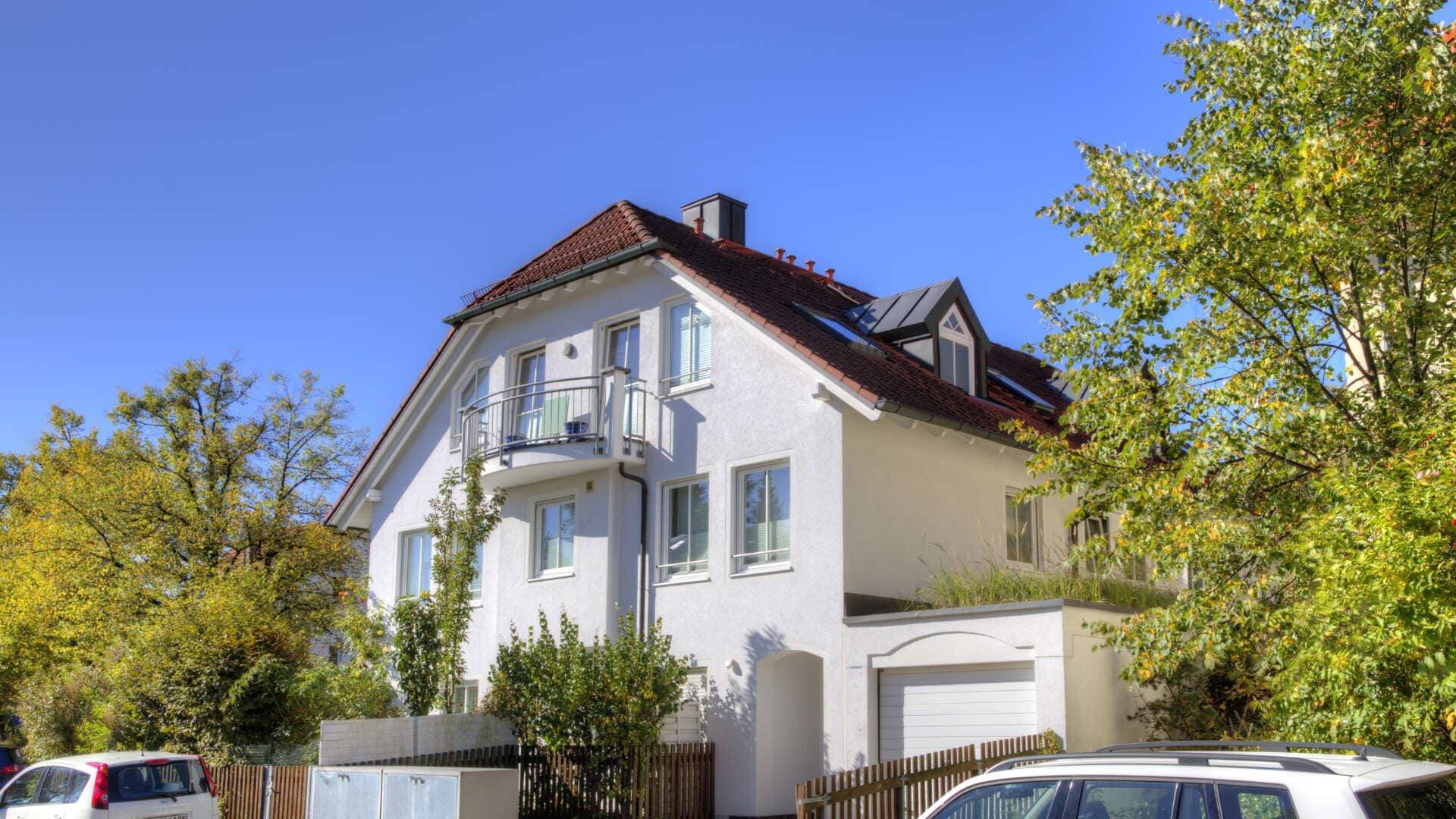
A vibrant Munich district with modern and historic residential buildings – exemplary of the diversity of the Munich real estate market. This demonstrates how important clear legal steps such as conveyance (Auflassung), notice of conveyance (Auflassungsvormerkung), and land register entry are for a secure real estate purchase.
Contact us – we are always available


Land register and land registry entry: Why it is indispensable when buying real estate
The land register is a public register that contains all important information about plots of land and real estate. It serves to make ownership structures as well as potential encumbrances and rights pertaining to a plot of land or real estate transparent and traceable.
When purchasing real estate, the land register plays a central role as it forms the legal basis for the transfer of ownership. Here are the main functions of the land register in real estate acquisition:
Proof of ownership: The current owner of a plot of land or a property is registered in the land register. If you want to buy a property, you can check the land register to see whether the seller is actually the rightful owner.
Information on strains: The land register provides information on potential encumbrances on a property, such as mortgages, land charges, or leasehold rights. As a property buyer, you should be aware of this information to avoid unpleasant surprises.
Registration of rights and obligations: Special rights and obligations related to the plot of land or property, such as rights of way or public burdens, are also recorded in the land register. These can influence the value of the property and should be taken into account when purchasing.
Transfer of ownership: For the change of ownership in a real estate acquisition to be legally valid, it must be entered in the land register. Only after the so-called "Auflassung", i.e. the entry of the new owner in the land register, is the real estate acquisition complete and sealed with the transfer in the land register.
In summary, the land register is an essential instrument in real estate acquisition, as it offers buyers and sellers legal certainty and creates transparency regarding ownership structures and potential encumbrances. Therefore, before purchasing a property, you should always take a look at the land register to identify potential risks early on.
Protection and clarity for property owners
The land register entry is a process by which a property is recorded in the official directory, the land register. All rights, purchase agreements, and potential debts associated with the property are recorded in the process. According to the rules of the Land Register Act, every property has its own permanent place in the land register.
Usually, the seller, the buyer, the land registry office, and a notary are involved. The seller promises to sell the property to the buyer. The actual transfer of ownership happens later when the buyer is registered as the owner in the land registry. Mostly, the notary takes care of the purchase agreement and the transfer. The land registry office reviews the application and makes the entry if everything is in order.
The time gap between the notarization and the actual land register entry of the buyer is an advantage for the seller, because the seller's property is not transferred simply by concluding a notarized purchase agreement. The seller waits until the buyer has fulfilled their obligations from the purchase agreement and has paid the purchase price in full.
Only with the entry in the land register does the buyer become the owner of the property. The notary submits the application for transfer to the land registry office only when all necessary documents and confirmations are available. This includes the seller's confirmation of receipt of the full purchase price, tax Certificate of non-liability, waivers and the like.
Hassle-free real estate buying and selling: Our customized consulting makes it possible
Do you need help buying or selling a property? We offer you individual and tailored advice, make you aware of legal pitfalls, and provide you with the necessary know-how so that your real estate transaction is completed without any unpleasant surprises. Learn about Rogers Real Estate.
FAQ – Frequently Asked Questions about Conveyance (Auflassung), Land Charge Cautionary Notice (Auflassungsvormerkung), and Land Register Entry
What are the main differences between a conveyance (Auflassung) and a land charge caution/notice of conveyance (Auflassungsvormerkung)?
When you buy a property, ownership is usually transferred to you through a transfer of deed in the land register. In this process, the conveyance is executed as the final step after you have paid the purchase price.
The priority notice of conveyance is an entry in the land register that is made as early as the signing of the purchase agreement. It indicates that a purchase agreement has been concluded for the property and that ownership will soon be transferred to you.
The main difference between the conveyance (Auflassung) and the land charge notice of conveyance (Auflassungsvormerkung) is that the conveyance represents the actual change of ownership, whereas the notice of conveyance is merely a preliminary notice. However, the notice of conveyance gives you, as the buyer, the security that you will soon receive ownership of the property once all conditions of the purchase agreement are met.
Overall, the conveyance and the land charge entry are important steps in the real estate purchase process and ensure that all parties fulfill their obligations and that ownership is legally transferred.
What is the significance of the rank of the land charge (or: caution for conveyance) in the land register?
The rank of the priority notice in the land register depends primarily on the time of entry. Therefore, real estate buyers usually want to take over the house, apartment, or property free of debt, and a release from debt is carried out before the purchase contract. Usually, the priority notice is at the very top of the order until the buyer's bank secures its loan by entering a land charge or a similar right. Anyone who provides a real estate loan usually wants the land charge to be entered first. This also applies when refinancing a real estate loan.
Is the sale of a property possible despite a priority notice of conveyance?
If you have a land charge caution for a property, it means that you have already sold it. You may not sell it again. If the buyer does not pay the purchase price by the agreed date, you must set them a deadline before you have the right to withdraw from the contract. If this happens, the notary will rescind the purchase contract and remove the land charge caution.
Please note: The claim for transfer of ownership and the purchase price in a real estate purchase does not become time-barred until after ten years. As the seller, you have the right to default interest.

Would you like to know the value of your property? Free and without obligation.
Would you like to know the current value of your property? You've come to the right place for informed value assessments. Call us: 089 70065020.
Our property valuation for you:
- A high-quality and comprehensive analysis of your property.
- Well-founded real estate valuation including market analysis.
- Ideal for owners, sellers, and buyers.
Excerpts from the purchase agreement regarding conveyance, notice of conveyance, and land register entry
The parties agree on the Transfer of ownership to the buyer. The transfer of ownership takes place for the security of the seller, however, only after full payment of the purchase price. All parties therefore declare that the unconditional conveyance does not contain a consent to registration and no application for registration. In addition, the parties, for themselves and their universal successors in title, grant the notary irrevocable power of attorney to issue this consent to registration. In the internal relationship, it is irrevocably instructed to issue the consent and to apply for the transfer of ownership in the land register in the name of the buyer only when the seller has confirmed receipt of the purchase price in writing or the payment of an amount equal to the purchase price owed, without interest, has been otherwise proven. The seller is obligated to issue the confirmation promptly and unprompted in text form.
To secure the claim to the transfer of ownership, the seller consents and the buyer applies for the entry of a priority notice of conveyance in favor of the buyer regarding the contractual property in the land register. The buyer consents and applies for this priority notice to be cancelled concurrently with the transfer of ownership, provided that there are no intermediate entries remaining to which the buyer has not consented.
The owner consents to the deletion of all encumbrances registered in Section III upon application for land register execution. As a precaution, consent is also hereby given upon application for execution to all declarations serving the required release from encumbrances, even to the extent that other real property is affected.
Real estate sales in Munich: Legally secure with your Munich real estate agent through conveyance and land register entry
If you want to play it safe when selling your property in Munich, it is advisable to hire an experienced Real Estate Agents in Munich having by your side. We, Rogers Immobilien, as a competent real estate agent, not only support you in the optimal marketing, but also accompany you professionally through all legal steps concerning the deed of conveyance, notice of conveyance, and land registry entry. This ensures that the entire sales process runs smoothly and legally secure.
Share


Download as PDF

Print page