+49 (0)89 70065020


Condominium – What actually belongs to the owner?
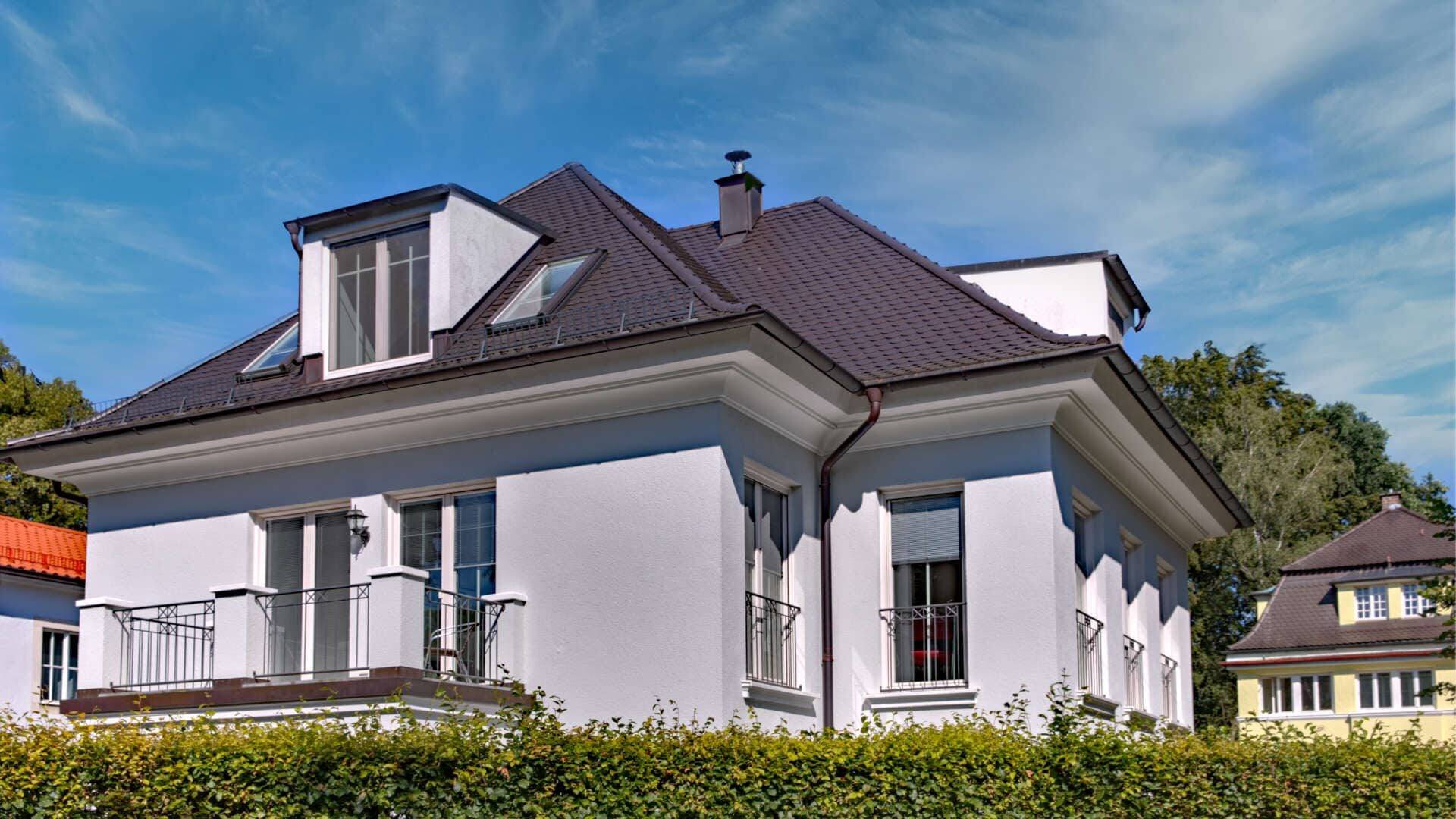
Condominium – What actually belongs to the owner?
As a condominium owner, some assume that everything in the apartment passed into their possession upon purchase. Purely factually speaking, this is also true, but from a legal perspective, it is not. With the signature on the purchase contract, one merely receives a share of a plot of land and the building standing on it in which the condominium is located, the so-called co-ownership share. For the apartment itself, only a right of use and disposal applies. More precisely, this means that all apartments in a building belong to all condominium owners, as do the shares in the property of the building. When purchasing a condominium, a distinction must be made between Common property, partial ownership and Exclusive property to distinguish.
How is condominium ownership established?
Condominium ownership is always established in writing for both newly constructed buildings and existing houses. Establishment refers to the legal creation of condominium ownership. The ownership arises from a normal piece of land, which is referred to as the principal property. A declaration of division records the number of existing or planned apartments and depicts them in a division plan. A specific fractional share of co-ownership in the property is assigned to each apartment. The separate ownership of the apartment and the co-ownership share in the common property together form the condominium ownership. This creates a real estate property that can be purchased and sold, or encumbered with a real property lien. A separate land register page is created for each apartment. A foreclosure sale of an individual condominium has no direct effects or disadvantages for the other owners in the apartment building.
Special use rights for certain parts of the common property can also be granted, for example for parking spaces in the underground garage. The establishment of residential property and partial ownership is regulated by law in the Condominium Act (WEG). The law also addresses the management of common property, the holding of owners' meetings, the formation of the maintenance reserve, and other aspects concerning condominium ownership.
Important information on the use of the property in the declaration of division
Therefore, it is important for the owner of an apartment to clarify what rights of use they have. Information on this is provided by the Community bylaws and the Deed of partition. The latter regulates what belongs to the common property and what falls under separate ownership. What is not explicitly listed as separate ownership is accordingly the property of all owners.
For example, car parking spaces, communal antenna systems, the outdoor area, pipes of any kind, and elevators are common property because they are used collectively. This is also true for the plot of land, the footprint of the building, as well as the roof, windows, load-bearing walls, exterior walls, etc. Unlike private property, no alterations may be made to the common property.
separate ownership for free disposal
As Exclusive property on the other hand, for example, the rooms of the condominium, non-load-bearing walls, wall coverings, flooring and interior doors, but also marked parking spaces in communal garages and installations such as kitchen or bathroom furnishings apply.
Separate ownership can also be referred to as spatial ownership. This is particularly important when it comes to the use of basement compartments or ancillary rooms. If such units are clearly recognizable as a room—meaning they are clearly demarcated by dimensions such as height, length, and width and are lockable—they usually also count as separate ownership unless designated otherwise in the declaration of division. The condominium owner has the right of free disposal over this.
Contact us – we are always available


What is included in part ownership?
Answer:
This includes, for example, retail and commercial spaces, offices, or storage rooms that are also housed within the property. However, owners of condominiums or such partial-ownership spaces do not have the automatic right to convert them into residential or commercial space. This always requires the consent of all co-owners of the property. If this occurs, the change of intended use becomes effective upon entry in the land register. Consequently, partial-owners must also adhere to the legal regulations regarding residential property, because the regulations concerning common and unit ownership, as well as the right of co-determination in the homeowners' association, also apply to holders of partial ownership in a property.
Rights and duties of the owners
As a condominium owner, you are automatically a member of the homeowners association for the entire property. This entails acquiring both rights and obligations to jointly dispose of the common property, for example regarding renovation or maintenance measures, or to decide on special rights of use for individual owners. These include, for instance, the right to use garden areas or underground parking spaces, or the authority to make structural changes to the condominium. In addition, every owner is obligated to maintain their property.
However, as the term itself suggests, the special right of use is specifically prescribed in order to prevent arbitrary use. This is intended to prevent disturbances to other owners. Special rights of use are entered in the land register with the consent of all owners and, upon sale, are also transferred to the successor as part of the transfer of ownership.
In accordance with the Condominium Act, every owner is obligated to maintain their apartment or private property (§ 14 no. 1 WEG) and to use it in accordance with legal requirements. In doing so, the property of the community or other private property must not be adversely affected (§ 14 no. 1 and 2 WEG).
The owners' association can adopt further obligations as part of the house rules.
Property division is important for the costs
The distinction between common property and separate property is not only important for issues relating to use or modifications. It serves as the basis for the distribution of all costs incurred. The economic plan (also known as the annual budget) provides an overview of the expected costs and determines the monthly maintenance fee (Hausgeld). This includes, for example, renovations or fees for the caretaker service. The allocation of such costs is derived from the distribution key in the community rules (Gemeinschaftsordnung). For each owner, this results from the co-ownership shares, which are either regulated by law or measured by the living space. The size of a condominium determines its co-ownership shares within the building. The distribution of burdens and costs is made among the respective owners in accordance with these shares. In addition to regulating the use of common rooms, the community rules also contain provisions on the distribution of voting rights and on resolutions regarding special rights of use.
Therefore, it is important for the owner of a condominium to know the community rules and the declaration of division precisely in order to avoid misunderstandings and conflicts within the homeowners' association.
The responsible property manager prepares an annual statement. Through the annual statement, the apartment owners' association receives an overview of the cost distribution, the costs for each individual unit, and the entire residential complex. The development of the maintenance reserve fund is also clearly presented. Based on the maintenance fee statement, landlords can see which costs they are allowed to pass on to the tenant. This helps them to prepare the utility bill for the rented apartment.

Would you like to know the value of your property? Free and without obligation.
Would you like to know the current value of your property? You've come to the right place for informed value assessments. Call us: 089 70065020.
Our property valuation for you:
- A high-quality and comprehensive analysis of your property.
- Well-founded real estate valuation including market analysis.
- Ideal for owners, sellers, and buyers.
A look into the history of homeownership
Already in the Middle Ages, there was so-called multi-story property in Europe, which can be seen as the precursor to residential property ownership. This involved a specially structured co-ownership by several private individuals and was practiced in the countries of the German Reich until the 19th century. Multi-story property applied to houses that had multiple floors or were higher than the ground floor.
The granting of multi-story property ownership was possible until January 1900, after which the Civil Code (BGB) came into force. However, the previously established multi-story property ownership remained and was not dissolved.
What is a structural alteration within the meaning of the German Condominium Act (WEG)?
Answer:
Structural alterations to common property and its components require the consent of all owners. This is because structural alterations involve a permanent reconfiguration of the common property. It is more than just maintenance or repair.
In principle, the Condominium Act (WEG) distinguishes between three categories in connection with structural alterations:
- Structural alterations (§ 22 para. 1 German Condominium Act)
- Modernizations (Section 22, Paragraph 2 of the German Condominium Act - WEG)
- Modernizing repairs (§ 22 para. 3 of the German Condominium Act [WEG] in conjunction with § 21 para. 5 no. 2 WEG)
For modernizations, a qualified majority resolution is required when voting in the owners' meeting. Modernizations increase the utility value, but the fundamental character of the property is not changed.
Modernizing repairs preserve the common property and go beyond mere repairs or restorations. They provide an effective cost-benefit ratio in a technical and economic sense. Simple majorities of the owners present at the meeting are sufficient to carry out modernizing repairs.
Does the bank also become the owner if it, or the land charge for the bank, is entered in the land register?
Answer:
It is often the case that the acquisition of real estate is carried out with the help of construction financing. In such cases, a land charge for the bank is entered in the Land Register (third section). This gives the bank security that it can receive the loan in full. If the buyer gets into a difficult financial situation and is unable to service the loan installments, the bank has the option of having the property foreclosed. The land charge is therefore a safeguard against default.
Ownership details are recorded in the first section. Consequently, the bank is not the owner of the property. However, a potential foreclosure sale could restrict the owner's options for action. Therefore, it is recommended that owners sell the property in a timely manner and thereby achieve the best possible purchase price.
It is always advisable for owners to avoid a foreclosure sale. We are happy to advise you without obligation when it comes to selling your property on the best possible terms. Simply contact us. We are very happy to assist you.
Share


Download as PDF

Print page