+49 (0)89 70065020


Home Charging Station: How to Connect Your Wallbox to Safely Charge Your Electric Car
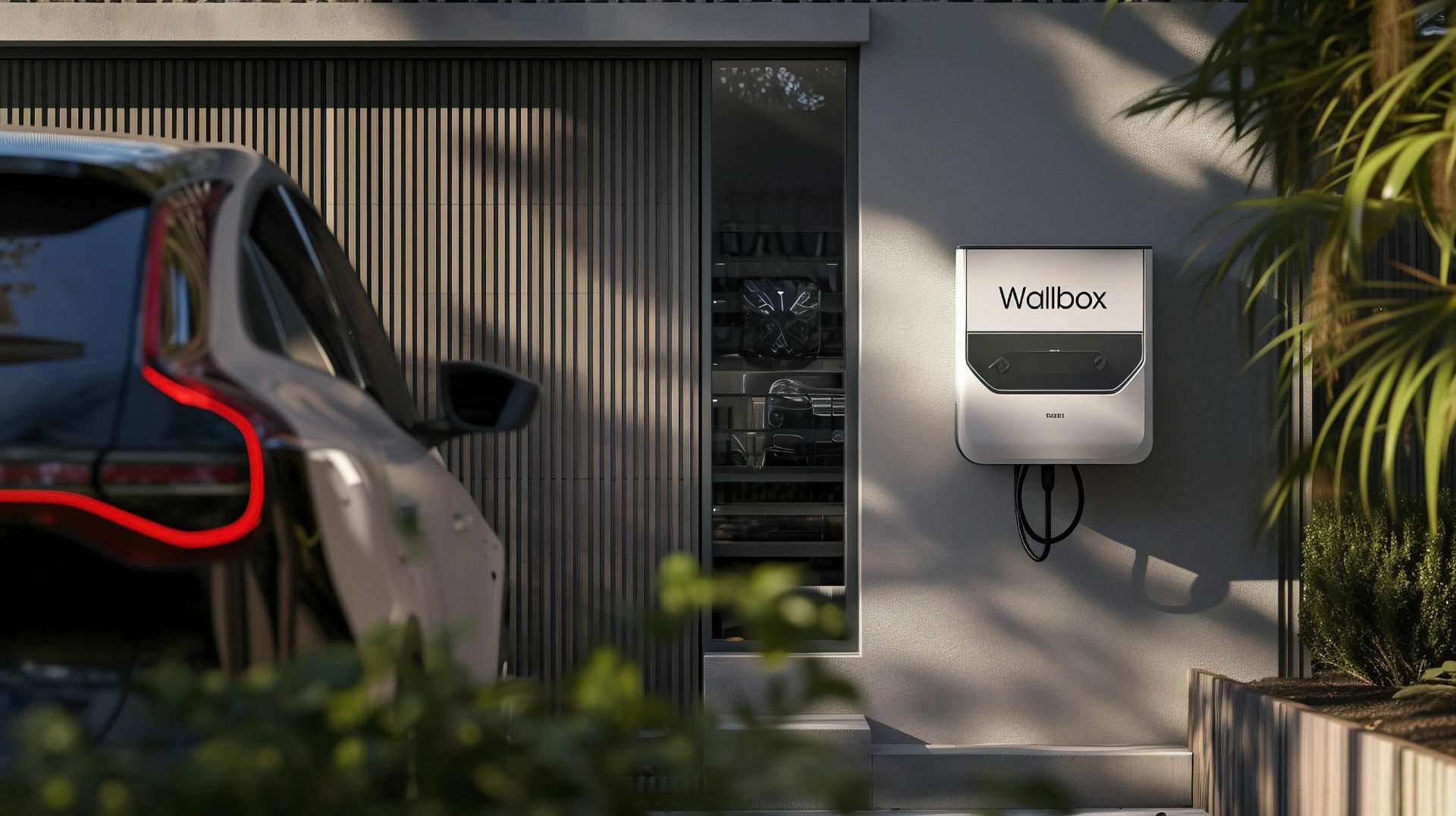
Home Charging Station: How to Connect Your Wallbox to Safely Charge Your Electric Car
Having a wallbox at home means not only convenience, but also efficiency. Electromobility is long since a thing of the future; rather, it shapes our everyday lives. With the growing popularity of electric cars, the question of the optimal charging option arises for many owners. This is where the wallbox comes into play: having your own charging station at home is not only a sign of progress and environmental awareness, but also offers incomparable comfort. But how do you connect a wallbox safely and efficiently? That is precisely what you will learn in this comprehensive article.
The advantages of a home wallbox for your EV
If you choose an electric car or already own one, the question of energy supply quickly arises. While more and more charging stations are being built at gas stations and public parking lots, a wallbox offers the opportunity to charge your electric vehicle conveniently at home.
Charging at a private wallbox is significantly faster than charging at a conventional household socket and safer than at a Schuko socket. Furthermore, charging at a private wallbox is more convenient than at public charging stations because you have no waiting times and do not need to drop off and pick up your electric vehicle separately. A wallbox automatically adjusts the charging power to your electric car, making use even more convenient. If your neighbors would also like to use a private charging station, you could even generate additional income from it.
Contact us – we are always available


Answer:
A wallbox, often referred to as a wall-mounted charging station, is a practical device that makes it possible to conveniently charge electric cars at home. Depending on the model, a charging station—meaning a wallbox—typically offers one to two charging points, often Type 2, for charging electric cars with alternating current. These charging points feature LED indicators that show the current charging status. Interestingly, a wallbox is not connected directly to the power grid, but rather to a separate circuit in the house. A special control unit, the so-called Electric Vehicle Charge Controller, is responsible for regulating the charging process. This device communicates with the electric vehicle and primarily controls the charging capacity.
Various mechanisms in the wallbox ensure safety. This includes a special residual current circuit breaker (RCCB) with residual current detection to prevent any potential hazards. A circuit breaker also protects the charging cable from possible overload. Many wallbox chargers also feature access control, either via a key switch or an RFID card reader. These serve to allow users to identify themselves and gain access to charging. This ensures that only authorized persons can use the wallbox.
Regarding the wallbox installation, they are available in different capacities:
- 3.7 kW: Ideal for plug-in hybrids.
- 11 kW and 22 kW: These are standard wallboxes for everyday electric car charging at your private three-phase connection.
- 150 to 350 kW: These High Power Chargers are fast-charging stations for electric cars that are primarily used on the go
For daily use at home, 11 kW and 22 kW wallboxes are usually suitable. These offer enough power to charge a standard electric car efficiently. For example, a car with a 40 kWh battery can be fully charged in about 4 to 5 hours with an 11 kW wallbox. While the 22 kW variant almost halves the charging time, power consumption increases because charging is done with more power. The most popular choice among users is often the 11 kW wallbox, as it offers a good balance between charging capacity and charging time.
Important to know is:
All charging stations and wallboxes with a capacity of up to 11 kW must be registered with your energy supplier. Wallboxes exceeding 11 kW additionally require approval from the energy supplier.
The costs and permits for the installation
If you are considering installing your own wallbox for your electric car at home, it is important to look into the costs involved. Prices for a wallbox vary depending on the model and are usually between 400 and 1,500 EUR. In addition, there are installation costs, which can fluctuate greatly depending on the scope of the required work and range between 400 and 2,300 EUR.
When calculating the installation costs of a wallbox, you should consider various factors:
- The type of building: Is it a single-family home, an apartment building, or perhaps a townhouse?
- The year the house was built: Are additional modernization measures necessary for older buildings?
- When deciding on your own wallbox, the question arises: Will it be installed in the garage, under a carport, or in another location?
- The distance of the parking space to the house: How far away from the house does the electric car need to be parked?
- The distance between the wallbox and the fuse box: How many meters of cable are needed to connect the wallbox to the fuse box, and do these lines have to be laid above or below ground?
- Necessity of wall penetrations: Do holes need to be drilled to connect the wallbox to the fuse box?
The good news is that you do not necessarily have to bear the full cost of purchasing and installing the wallbox yourself. Anyone who buys a wallbox can receive a subsidy of up to 900 EUR for each charging station thanks to funding programs, such as those from KfW.
Who is allowed to connect a charging station?
The installation of a wallbox requires the expertise of a specialized company. This is because there is a danger to life at a voltage of 400 volts. The responsibility for proper installation lies with the electrical installer, who is generally also responsible for registering and obtaining approval for the wallbox from the grid operator.
How do I find a suitable service provider near me to have my wallbox installed?
- To find a qualified electrician to install your wallbox, you can contact your trusted electrical contractor and check whether they are listed in the grid operator's installer directory for wallbox installations.
- An alternative is offered by wallbox manufacturers and specialized expert partners, who often provide installation services through a network of electricians. Here you can often get complete packages that include the wallbox as well as the installation.
- Furthermore, local municipal utilities are often a helpful point of contact and offer wallbox packages that include installation and a green electricity contract
Grid operator requirements
Do you need to get permission to install a charging station? No special approval is required for charging stations up to 12 kW. It is sufficient to inform the grid operator that you want to install an EV wallbox. Usually, the electrical contractor handles this notification at no additional cost. Informing them about the installation of an additional wallbox allows the grid operator to manage the power grid more efficiently.
He can better assess local loads, prevent overloads, and ensure a stable power supply. If necessary, the operator can take early measures to adjust the power grid.
However, wallboxes with a charging capacity of more than 12 kW require approval from the grid operator. After submitting the application, the grid operator will check your home connection and the suitability of the power distribution grid for installing a wallbox. The process of obtaining this approval can take several months depending on the grid operator, so it is advisable to take care of it in good time before having the electric car wallbox installed.
Prerequisites for installing a wallbox: The technical requirements
The most important prerequisite for the installation of your wallbox concerns the electrical equipment of your house. This can vary considerably from house to house and should ideally be individually evaluated by a specialist.
Service connection and the capacity for wallbox installation
A crucial factor for the installation of a wallbox is your home electrical connection, as wallboxes require a considerable amount of energy.
- If you want to connect a wallbox with a charging capacity of 11 kW or more, a high-voltage current connection is required. This term refers to the use of three-phase alternating current, in which three alternating currents of the same frequency are linked together. Nowadays, three-phase alternating current is also common in private households to provide both conventional 230-volt alternating current and 400-volt three-phase current (e.g., for the stove). In ideal cases, a high-voltage connection is already located near your electric vehicle parking space, especially in new buildings. In most cases, however, the high-voltage connection is not directly at the parking space, which may require extensive construction work. If there is no high-voltage connection in your house or if it is too far away for the wallbox installation, the costs for the necessary modifications can be considerable.
- Wallboxes can also be operated without a high-voltage power connection by connecting them via a single-phase connection to a conventional power outlet. In this case, however, the charging time for your electric vehicle will be significantly longer.
Residual current circuit breaker: RCCB
Residual current circuit breakers serve to protect electrical appliances in the household and people from electric shocks. When a residual current flow occurs, the RCCB interrupts the circuit. The use of a residual current circuit breaker for the wallbox is legally required. When purchasing your wallbox, make sure that a protection mechanism against DC residual currents is already integrated. Today, this is the standard for new and high-quality devices. This device prevents direct current from the wallbox from entering the AC grid and spares you the costly installation of a Type B or Type A-EV residual current circuit breaker in your home installation. If you have purchased a wallbox without this protection mechanism, you should install a Type B or Type A-EV residual current circuit breaker in your fuse box, which detects smooth DC residual currents such as those that can occur when charging electric vehicles.
Circuit breaker
The circuit breaker protects the power line against overheating and is installed in the meter cabinet. If too much current flows, it interrupts the circuit. The circuit breaker must be selected according to the charging power and may only be installed by an authorized electrical installation company.
Electricity meter
Since the electricity meter plays a central role, it should not be too far away from the wallbox. It is also important when installing a wallbox to check whether there is enough space in the meter cabinet for residual current circuit breakers and miniature circuit breakers. In an apartment building, multiple households are supplied with electricity at the same time, which can limit the available power reserves for charging at a private charging station. In such cases, installing an additional grid connection can be a solution.

Would you like to know the value of your property? Free and without obligation.
Would you like to know the current value of your property? You've come to the right place for informed value assessments. Call us: 089 70065020.
Our property valuation for you:
- A high-quality and comprehensive analysis of your property.
- Well-founded real estate valuation including market analysis.
- Ideal for owners, sellers, and buyers.
Choosing the optimal location for your wallbox
Before installing or setting up your electric car charging station, you should consider a few things to ensure smooth and safe operation.
Protection against the elements
Although most modern charging stations have at least an IP54 protection rating, it is still advisable to protect the wallbox from prolonged sunlight and rain. Usually, it is sufficient to install a small weather protection canopy over the charging station to ensure adequate protection.
When choosing the installation location for the wallbox, you should also ensure that the cable route is simple and accessible.
Consideration of the wallbox charging cable length
If you have decided on a charging station with a tethered charging cable, which is my personal recommendation, you should definitely make sure the cable is sufficiently long. The position of the wallbox in the garage should be chosen so that you do not have to maintain millimetre precision when parking your electric car and accidental jamming of the charging plug is avoided.
Even better would be if a visitor in the second row also had the possibility to reach the wallbox without having to move the cars. A cable length of at least 5 meters increases comfort and flexibility when charging your electric car.
Prevention of tripping hazards
To ensure the charging cable does not become a tripping hazard, the wallbox should be installed on the wall on the same side where your car's charging port is located. This way, you can plug in the cable quickly and pack it away just as quickly in the morning without having to walk around the car every time.
Compliance with safety distances
When installing the wallbox, make sure that it is not mounted near combustible, highly flammable, or explosive materials. The exact safety clearances for the wallbox installation can be found in the charging station's installation manual.
What steps need to be considered when installing a charging station?
The installation of a wallbox for electric cars takes place in several steps:
1. Inspection of the service connection
The first step in installing a wallbox is to check your own grid connection for sufficient capacity. If your connection does not provide enough capacity, you must contact your grid operator.
2. Modification of the distribution box
A heavy-duty power connection should already be available for the installation of a wallbox. If such a heavy-duty power connection is already located in your garage or at your desired location for the wallbox installation, you can use it for the charging station. In this case, you only need to change the label in the fuse box and you can proceed to step four.
However, if there is not yet a heavy-duty power connection at your desired installation location, it must be installed first. To ensure a wallbox can be installed in the best possible way, a new cable is installed that is protected by a circuit breaker. When connecting a wallbox, the power supply in the fuse box must be adjusted.
3. Installation of the cable to the charging station
To route electricity from the distribution box to the wallbox, a cable is run to the installation site. Since the distribution box is rarely located in the garage or outdoors, installing a wallbox often requires drilling through walls. These holes can be made with a drill and only need to be large enough for the cable to pass through.
4. Installation of the wallbox
After the cabling for the wallbox has been laid, the charging station can be mounted at the installation site and connected. During a wallbox installation, a type B residual current circuit breaker must also be installed to prevent residual currents. However, it is possible to save costs and effort if the wallbox model already has an integrated residual current device (RCD). As an alternative during the installation of the wallbox, installing a more cost-effective type A residual current circuit breaker is sufficient if the charging station is equipped with DC residual current detection.
Tenants and owners – Conditions for installing a wallbox
Homeowners have the right to have a private electric car charging station installed anywhere on their own property.
If someone owns an apartment managed by a housing cooperative or a homeowners' association, they can rely on the Condominium Modernization Act (WEMoG) of December 1, 2020. This makes it possible to demand the installation of a wallbox in a parking space belonging to the condominium. If the application is received by the homeowners' meeting in due time, the meeting cannot reject the application, but can only co-determine how the design should be implemented.
Tenants, on the other hand, are only allowed to have a charging station installed with the express consent of their landlord.
Can I charge my electric car with solar power?
The electricity costs for charging an electric car are often high. To reduce these costs in the short or long term, using solar energy through photovoltaic systems or wind turbines is an attractive option.
There are various scenarios and options:
- If you already own a photovoltaic system (PV system) but do not have a battery storage system or charging station, the generated electricity is fed directly into the grid, and you receive a feed-in tariff. However, you can consider installing a battery storage system and a charging station. This allows the PV system to be configured so that the battery storage is charged first and excess energy is fed into the power grid. Note that the wallbox must have the necessary connectivity to be operated with a PV system and battery storage (not all wallboxes support this).
Some electricity providers also offer the option of feeding all the generated energy into the power grid and purchasing the electricity needed for the wallbox at a cheaper rate. - If you do not own a PV system, battery storage, or charging station, but plan to install a PV system with battery storage, you should definitely install a wallbox at the same time. This has the advantage that you can benefit from various funding opportunities and are well-equipped for electromobility. The disadvantage is the initially higher investment.
- If you already have a PV system and a battery storage unit, but do not have a charging station, this is the most cost-effective option. In this case, you only need a wallbox that is suitable for operation with a PV system and battery storage.
- Wind turbine for your power connection: Using a home wind turbine can also enable significant savings on electricity costs. Similar to a PV system, you can feed the generated energy into the power grid or store it in a battery storage system and use it to charge your electric car.
Approximately how long does it take to install a wallbox?
The installation of a wallbox usually takes up to half a day. In the case of more complex renovation work, such as excavation work to lay cables over longer distances into the underground parking garage of an apartment building, the process can take correspondingly longer.
Home wallbox: maintenance obligations and recommendations
After installing your wallbox at home, the question often arises whether and how often it needs to be serviced. Unlike wallboxes in businesses, which must be inspected every year, there is no legal obligation for regular maintenance of private charging stations. Nevertheless, it is advisable to have your wallbox checked by a professional every two to four years. You should expect this inspection to cost approximately 200 EUR.
Effective safety measures for your home wallbox: From access control to insurance
To protect your wallbox from unauthorized use or theft, there are various measures:
- Access control: Especially in semi-public areas such as underground parking garages of multi-family houses, it makes sense to install a wallbox with access control. Only persons with a special RFID card, access via an app, or a key can then use the wallbox.
- Lockable protective box: To protect your wallbox from unauthorized access, theft, or vandalism, you can house it in a lockable box. Make sure that the box offers sufficient ventilation, as heat is generated during charging.
- Securing the charging cable: Charging cables are a popular target for thieves. Type 2 plugs feature an automatic locking function that secures the cable during the charging process so that it cannot be easily removed.
- Video surveillance: One way to further secure your wallbox is to install a surveillance camera. Modern, smart cameras, such as the Bosch Smart Home Eyes Outdoor Camera, can use intelligent video analysis to detect when someone is tampering with your wallbox and notify you via an app.
- Insurance coverage: If your wallbox is ever stolen or damaged, the costs may be covered by your auto or home contents insurance, depending on your insurance policy. If the wallbox is permanently connected to the building, it can additionally be insured against damage such as hail, fire, or water through your residential building insurance.
Share


Download as PDF

Print page