+49 (0)89 70065020


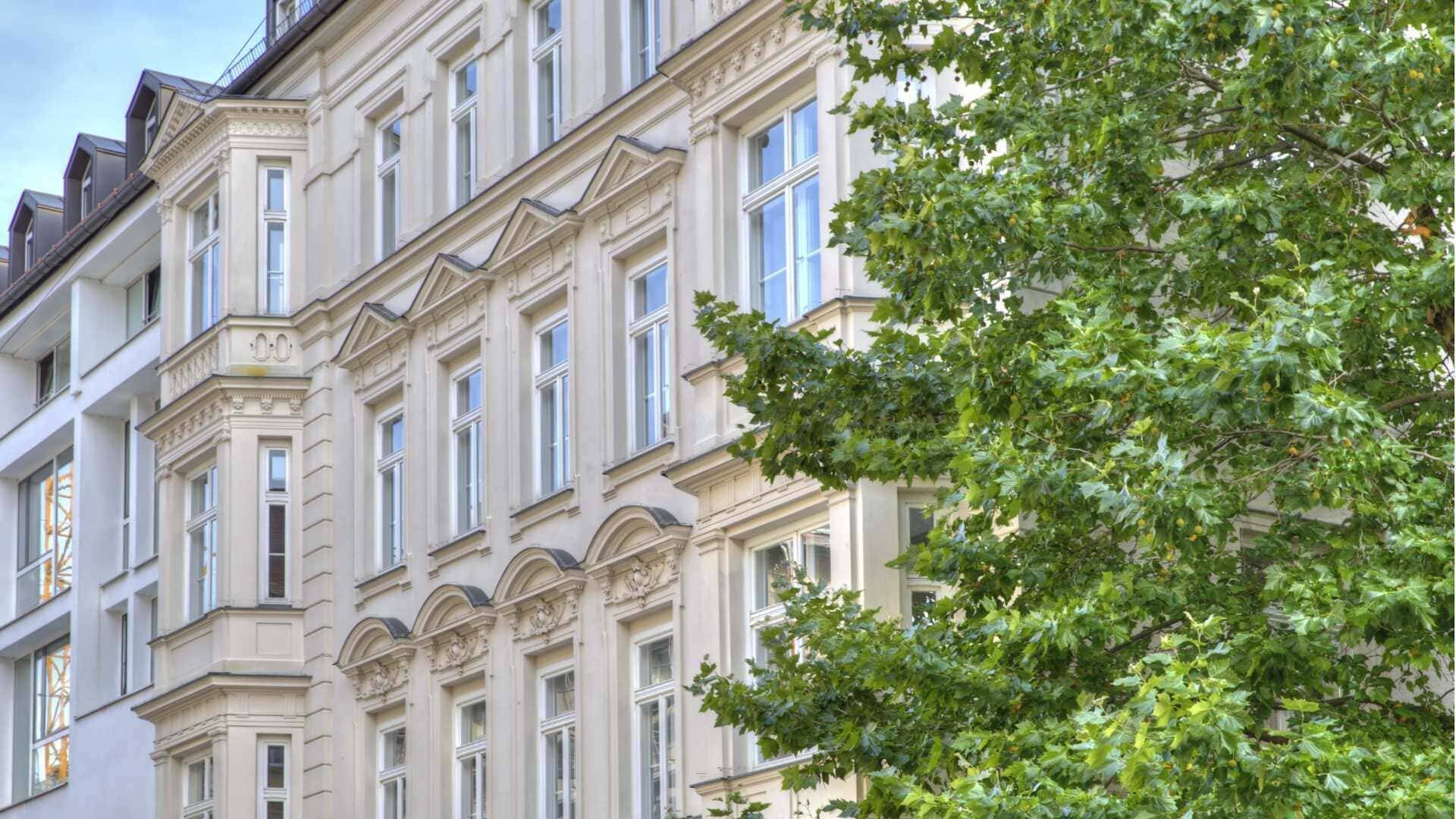
What should be considered when buying an older building?
Living in a renovated urban villa with high ceilings featuring elaborate stucco elements, fine parquet floors, and spacious double doors: for many of us, that is a dream. Just as alluring is the charming 1960s single-family home—nicely situated in the countryside and built at a time when a generous garden was a matter of course. Buying an older building offers many advantages if done right. Anyone wanting to purchase an older property instead of building new should look very closely. And keep a cool head when doing the math.
Why old love can sometimes rust after all
Older houses have experienced a great deal. When they were built, thermal insulation was an unknown concept. The buildings were frequently damaged, remodeled, and renovated—according to the construction standards of the time. Owners came and went, leaving their marks as well. Improper repairs, self-installed wiring, and rotted pipes: an older building is a grab bag in many ways. The Association of Private Builders advises potential buyers to consult an independent construction expert before signing a contract. Because there are numerous vulnerabilities that are simply not recognizable to a layperson. Among the most common defects in older buildings are deficient building services, a lack of thermal and acoustic insulation, damp cellars and exterior walls, as well as leaky roofs. Old lead water pipes, health-hazardous materials, and adventurous electrical cables also do not meet today's standards in any way. If these defects are not professionally remedied, it not only impairs living comfort. In the worst case, it can even affect one's health.
What typical defects frequently occur in an old building?
Whether a 19th-century city villa or a flat-roofed bungalow from the post-war economic miracle years: every older building has its specific problem areas. Read here which defects occur particularly frequently in houses from the Gründerzeit era up to the 1970s.
A period building from the Gründerzeit era
Buildings from the Gründerzeit era (1840 to 1900) are among the particularly popular old buildings. At the same time, these aged houses can harbor a number of defects. The roof, exterior walls, and basement frequently require comprehensive renovation. Because wooden elements were used in the past, there is a risk of pest infestation. In addition, the doors and windows are generally inadequately sealed. Furthermore, all electrical installations as well as the water and sewage connections must be thoroughly inspected. The decisive question is therefore what was renovated, modernized, or refurbished and when.
Old buildings between 1900 and 1950
Houses from this period exhibit the same vulnerabilities as buildings from the Gründerzeit era: leaky roofs, cracks in the plaster, damp cellars, leaky windows and doors, worn-down stairs, pest infestations in wooden structural elements, and dry rot in the floor slabs. From the 1930s onward, construction became simpler—though still without thermal and acoustic insulation. In an old building from this era, the plastered facade frequently needs repair. In addition, the cellars are damp and the electrical installations are defective.
Contact us – we are always available


post-war older buildings
After the war, corners were often cut in construction. Materials were also scarce, so extensive renovation is generally inevitable. Problem area number one: the roof (especially on flat roofs), followed by inadequate thermal and acoustic insulation. In many cases, outdated exterior wall cladding on older buildings from this era also becomes apparent through damp spots in the masonry. The electrical installations, by comparison, are relatively modern. Prefabricated houses entered the market in the 1970s. As part of the first Thermal Insulation Ordinance (1977), buildings now had to be better insulated. Building materials common at the time, such as asbestos, can be problematic. In many cases, facade renovation and heating system replacement are also necessary.
Checklist: What you need to look out for in older buildings
- Basement and walls: Are these adequately sealed?
- Ceilings and vaulted cellars: Are there rusted steel beams?
- Plumbing installations: Is there any corrosion?
- Gas lines: Are there any leaks?
- Heating and electrical systems: Are these outdated? What about the emissions?
- Chimney: Does the flue damper work properly?
- Roof and roof truss: Is everything watertight? What about the insulation?
- Doors, stairs, intermediate ceilings: How is the sound insulation?
- Thermal insulation: Does the insulation comply with the Energy Saving Ordinance? Are the windows and doors well-sealed?
- Fire safety: Where are improvements needed?
Why an expert report is worthwhile
Surely you do not want to buy a pig in a poke. Naturally, the seller must inform you of any known defects. We inspect every property we offer in our portfolio and thoroughly inform prospective buyers about any potential problems and renovation needs. Our property descriptions provide precise information on what was renovated, remediated, or modernized and when. That is part of our service as real estate agents. We ensure that prospective buyers receive sufficient information about each property and can make an informed decision. We place great value on transparency. However, if you are buying a property without a professional real estate agent by your side, it is advisable not to forego an expert when purchasing an older building. What looks like a mere cosmetic flaw at first glance could quickly turn out to be serious structural damage and entail considerable costs. You may also have to comply with historic preservation regulations. Anyone who discovers mold, pests, and a porous substrate in a timely manner can withdraw from the purchase or significantly renegotiate the price if this defect was not already factored into the asking price. If you buy an older building, you can obtain an expert appraisal. The costs for this average around 500 euros. That is a worthwhile investment and significantly cheaper than nasty surprises.
Buy or not buy: When is a renovation worth it?
Much speaks in favor of an older building: the price, the often attractive location, and grandfathered rights. As a buyer, you also do not have to deal with construction plans, authorities, construction companies, and architects. You buy your dream home, fix it up, and can move in comparatively quickly—one reason why older buildings are so popular, especially among young families. If you realistically calculate the renovation costs, go for it. If the necessary renovation costs drive the total price up significantly—keep your hands off the older building. In the case of an unrenovated and unimproved older building, a little paint is usually not enough. As the owner, you are obligated to carry out a renovation in accordance with the applicable energy saving regulations. In doing so, you should also take into account the benefits of relevant funding programs that may financially assist you.
Share


Download as PDF

Print page

Would you like to know the value of your property? Free and without obligation.
Would you like to know the current value of your property? You've come to the right place for informed value assessments. Call us: 089 70065020.
Our property valuation for you:
- A high-quality and comprehensive analysis of your property.
- Well-founded real estate valuation including market analysis.
- Ideal for owners, sellers, and buyers.