+49 (0)89 70065020


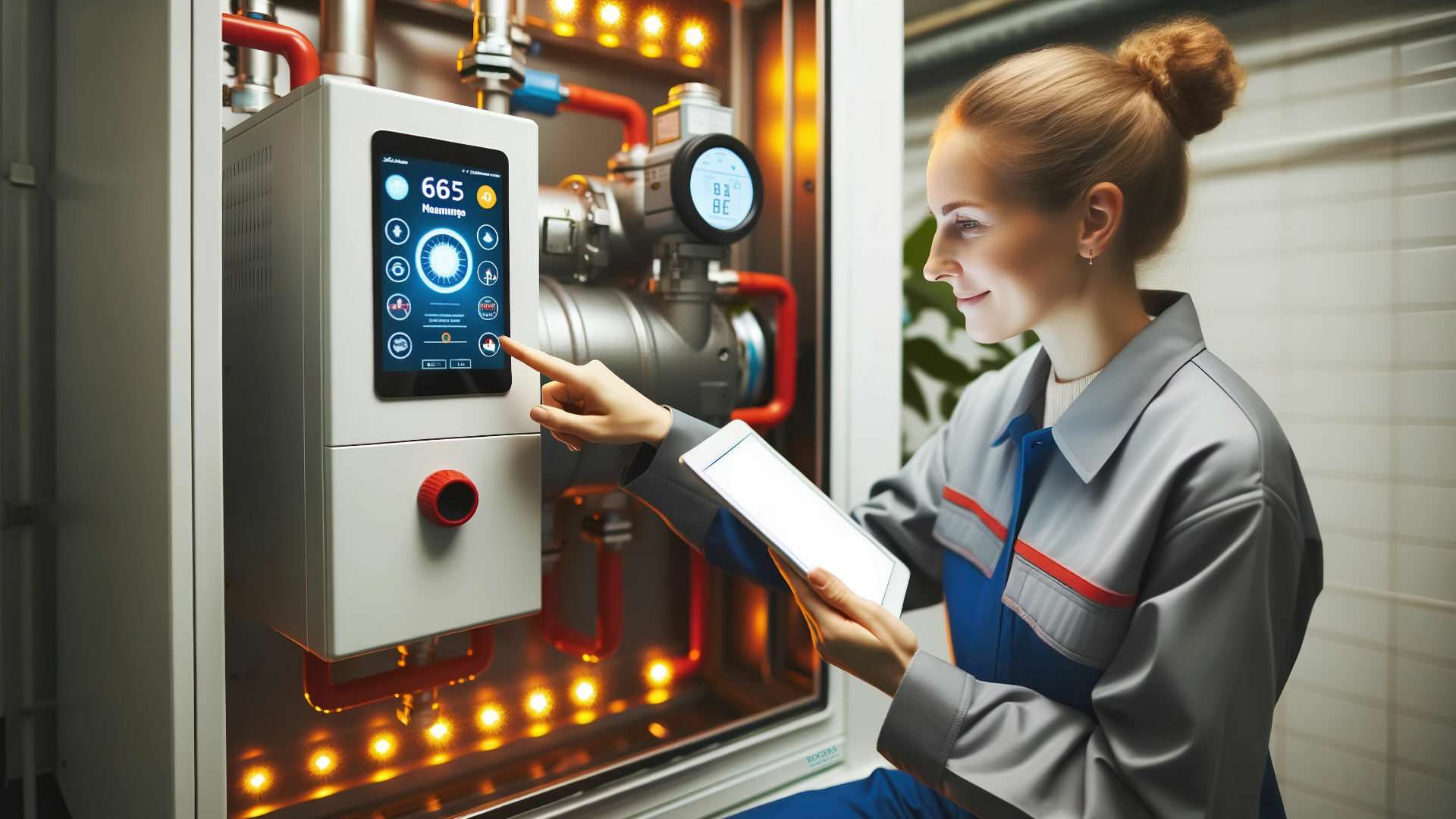
The Building Energy Act in practice: What does switching to a heat pump cost?
The Building Energy Act (GEG) marks a significant turning point in German energy policy, especially for property owners. It lays the foundation for a more sustainable, environmentally friendly future and aims to reduce the energy consumption of buildings and promote the use of renewable energies. A central element of this change is the trend toward the heat pump. As an efficient and environmentally friendly alternative to traditional heating systems such as gas and oil heating, the heat pump is gaining increasing importance. But what does this change mean concretely for property owners, particularly with regard to the costs of heat pumps? In this article, we will examine this question in detail and provide a practical overview of the financial aspects of switching to heat pumps.
From environmental friendliness to cost efficiency: The benefits of heat pumps
In recent years, the heat pump has established itself as one of the most promising technologies in the field of heating systems. But why are more and more property owners considering this option, especially when taking the costs of heat pumps into account?
Traditional heating systems, especially those based on fossil fuels, are often less efficient and can cause higher operating costs. Heat pumps, on the other hand, use existing energy from the environment—whether from the earth, water, or air—to generate heat. This makes them not only more efficient, but often also more cost-effective to operate. In addition, they are generally more durable and require less maintenance than their traditional predecessors.
Another decisive advantage of heat pump technology is its positive environmental balance. Compared to conventional heating systems that burn fossil fuels and thereby release CO₂ and other pollutants, heat pumps operate almost emission-free. This contributes significantly to reducing a building's carbon footprint and supports global efforts to combat climate change.
Energy efficiency is another aspect that sets the heat pump apart from traditional heating systems. While conventional heaters often convert only a portion of the supplied energy into heat, heat pumps can provide multiple times the consumed energy as heat. This makes them one of the most efficient heating options on the market, which can lead to significant savings on energy costs in the long run. Considering all these benefits and the fact that the costs of heat pumps are often offset by government subsidies and long-term energy cost savings, it is no wonder that more and more property owners are considering making the switch.
Although heat pumps are generally more energy-efficient than traditional heating systems, operating costs still arise. However, these costs are often lower because heat pumps use environmental energy. Maintenance costs are generally lower compared to traditional heating systems because heat pumps have fewer moving parts and are therefore less prone to wear and tear.
A significant advantage for property owners looking to invest in a heat pump is government subsidy programs. These programs can cover a substantial portion of the costs for heat pumps, both for purchase and installation. There are a variety of funding opportunities at the federal and state levels, and it is advisable to thoroughly inform oneself about the available options in advance.
A special highlight is the offering from the Reconstruction Loan Corporation (KfW), which provides attractive loan options for financing heat pumps. These loans can offer a cost-effective way to finance the investment in eco-friendly heating. For specific information on KfW loans and the conditions for heat pump loans in 2024, please visit KfW loan for a heat pump.
In addition to these loans, both the federal government and the federal states offer various subsidy programs aimed directly at reducing purchase and installation costs. Currently, conversions to heat pumps, among other things, are subsidized with up to 40 percent of the investment costs. Future plans provide for increasing this support to up to 70 percent, although presumably with an income limit. However, a basic subsidy of 30 percent is to be granted regardless of income.
These government incentives represent significant financial relief for property owners and make investing in a heat pump even more attractive. However, it should be noted that funding conditions can change, which is why early and thorough research as well as consulting a professional advisor is recommended.
Contact us – we are always available


Cost overview: From the purchase to the installation of heat pumps
When property owners consider switching to a heat pump, the cost of heat pumps is often a central concern. It is important to understand that the total costs not only include the purchase of the heat pump itself, but also a number of other factors.
Single-family home: What does switching to a heat pump cost?
The purchase costs of a heat pump can vary depending on the model, size, and type (e.g., air-water, brine-water). In addition, there are installation costs, which can differ depending on the complexity of the project and local conditions. It is advisable to obtain multiple quotes from specialized companies in order to get an overview of the expected costs. To get a preliminary orientation, owners of unrenovated single-family homes with approximately 150 square meters can estimate costs of around 45,000 EUR for switching from an oil heating system to an air-water heat pump. This amount also includes the costs for removing the previous heating system.
The described scenario represents the simplest and most cost-effective case. However, costs increase significantly if, for example, an old night storage heater has to be replaced instead of an oil or gas boiler, and domestic hot water must be heated using individual instantaneous water heaters. In such cases, the installation of new radiators and the laying of pipes throughout the entire building are required. In addition, an adaptation of the water pipe system is necessary, since the water will be heated by the heat pump in the future. For such a scenario, costs can quickly rise to around 60,000 EUR.
Do the considerations end here? Shouldn't an energetic renovation of the building also be taken into account? It is possible to install a heat pump in a building that has not previously been energetically modernized. It is important that at least basic energetic renovation measures are carried out, such as insulating the basement ceiling and the top floor ceiling. In particular, the insulation of the top floor ceiling is required by law and offers significant benefits at a comparatively low cost.
In a later step, additional measures could be considered, such as installing windows with thermal insulation glazing. While complete insulation of the entire building would be beneficial, it can involve significant costs and is not strictly necessary in many cases. However, it is advisable to consult an energy advisor to ensure that all measures are implemented correctly and efficiently. An expert can provide detailed information on the impacts and benefits of each energy-efficiency measure. This ensures that you make the best decisions for your building and save energy and costs in the long term.
Apartment building with apartments equipped with individual gas floor heating: Modernization of 70 square meters with new heating technology
In this scenario, it is necessary to replace the individual gas water heaters in the apartments with a central heating system using a heat pump. For this conversion, existing heating pipes in the apartments must be connected to new pipes that lead to the central heat pump in the basement of the building. The estimated costs for these adjustments in one apartment are around 8000 EUR.
Furthermore, if the decentralized domestic hot water supply, which is currently provided by electric instantaneous water heaters, were also to be replaced, the costs could increase significantly and exceed the amount of 18,000 EUR per apartment. This estimate does not yet include the acquisition costs for the heat pump itself.
Retrofitting in an apartment building with eight apartments
The costs for converting from an oil heating system to an air-to-water heat pump in such a building are estimated at around 87,000 EUR. Compared to the costs for a single-family home, this appears advantageous. However, the costs can rise significantly if, in such a building with six apartments, an existing electric heating system and decentralized domestic hot water supply via electric instantaneous water heaters need to be replaced by a central air-to-water heat pump and a central domestic hot water supply. In such a scenario, the total costs could amount to up to 200,000 EUR.
Cost analysis and customization: Important factors for your decision
The mentioned price examples are based on data from the construction cost index as well as standard industry experience. It is important to emphasize that these prices represent mere guidelines. Depending on the individual case and regional conditions, the actual costs may vary.
For a detailed overview of the purchase and installation costs of various heat pump types, including funding opportunities and additional adaptation costs, you can at Heat pumps 24 inquire. Here you will find all the important information that can help you make a decision.
Heat pump investment: Between current costs and future subsidies
It is important to note that these costs can vary depending on the region, provider, and specific requirements of the project. Therefore, it is recommended to obtain multiple quotes from specialist companies in order to get an accurate overview of the expected costs. Government subsidies were not taken into account in the listed cost estimates. This means that property owners can potentially receive significant financial support from the state. Currently, among other things, conversions to heat pumps are subsidized with up to 40 percent. Future plans include increasing this support to up to 70 percent. However, it should be noted that this increased funding is expected to apply only to property owners with an annual taxable income of less than EUR 40,000. However, a basic subsidy of 30 percent is to be granted regardless of income.
Some experts from the heat pump industry are expressing concern that the planned increase in subsidies could temporarily slow down the current trend toward heat pumps. They suspect that many owners might postpone their projects in the hope of benefiting from higher grants next year, especially if the new subsidy guidelines come into effect at the same time as the amendments to the Building Energy Act (GEG) at the beginning of 2024. It is also important to emphasize that property owners do not have to act immediately if their heating system breaks down. There is no immediate obligation to replace it. Repairs remain permissible as long as they are feasible. Furthermore, the GEG will only be fully implemented once a municipal heat planning is in place.
Share


Download as PDF

Print page

Would you like to know the value of your property? Free and without obligation.
Would you like to know the current value of your property? You've come to the right place for informed value assessments. Call us: 089 70065020.
Our property valuation for you:
- A high-quality and comprehensive analysis of your property.
- Well-founded real estate valuation including market analysis.
- Ideal for owners, sellers, and buyers.