+49 (0)89 70065020


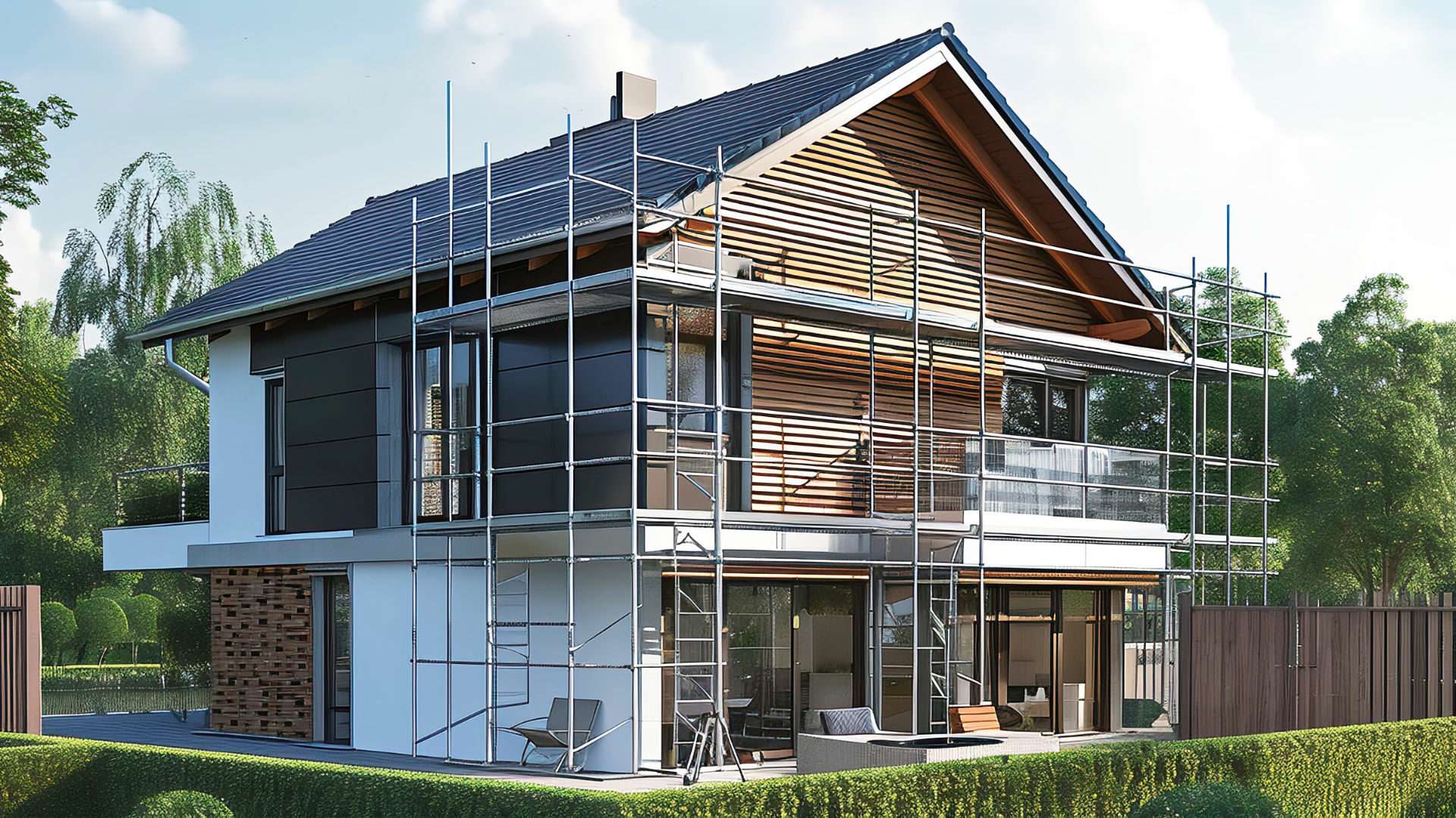
Renovation obligation for residential buildings: Everything homeowners need to know about the EU renovation obligation
The European Union has set itself an ambitious goal: the continent is to be climate-neutral by the year 2050. A major step in this direction taken by the European Commission is the reform of the Energy Performance of Buildings Directive, which underwent crucial updates at the end of 2023. This reform is more than just a bureaucratic act – it is a central building block in the EU strategy to reduce greenhouse gas emissions and promote sustainable, energy-efficient living and working environments.
The Buildings Directive, officially known as the Energy Performance of Buildings Directive (EPBD), is an instrument aimed at drastically reducing energy consumption in buildings. Residential buildings are a particular focus here, as they account for a significant share of total energy consumption in the EU. The recent amendments to the directive reflect the urgency with which the EU wants to achieve its climate targets. They set new standards for energy efficiency while simultaneously opening up new perspectives and challenges for property owners.
Abolition of the renovation requirement in the EU Energy Performance of Buildings Directive: new standards for the building sector
To achieve the ambitious goal of climate neutrality by 2050, the European Union has adopted stricter measures to improve energy efficiency in real estate as part of a revision of its Energy Performance of Buildings Directive (EPBD). On December 7, 2023, representatives of the European Parliament reached a breakthrough in negotiations on the controversially debated directive for EU buildings.
In this context, it was decided not to include a binding renovation obligation for individual residential buildings. Under the revised Energy Performance of Buildings Directive, energy consumption in residential buildings is expected to be reduced by an average of 16 percent by 2030 and by 20 to 22 percent by 2035.
This new regulation, which was welcomed by real estate owner associations and the housing industry, departs from the European Parliament's earlier demand to specifically renovate poorly insulated private residential buildings. Organizations such as Haus & Grund had previously warned of a significant loss in property value due to mandatory renovations. The Federal Association of German Housing and Real Estate Companies (GdW) considers the compromise reached to be a positive sign and once again emphasizes the importance of neighborhood-based concepts.
The following new regulations by the EU Commission have been established for the building sector:
- Targets for new buildings from 2030 onwards: In the future, new buildings are to be emission-free.
- Reduction of primary energy consumption in residential buildings: A reduction of at least 16 percent is planned by 2030, and a decrease of 20 to 22 percent is to be achieved by 2035. EU member states are urged to implement corresponding strategies.
- Renovation measures for non-residential buildings: Plans are in place to renovate 16 percent of the worst-rated buildings by 2030 and 26 percent by 2033.
- Introduction of a solar panel mandate: By the year 2030, solar systems are to be installed step-by-step on public buildings, non-residential buildings, and new constructions, provided this is feasible from a technical and economic perspective.
- Gradual phase-out of fossil heating fuels by the year 2040: From 2025, the subsidization of these fuels is no longer planned in the EU. However, financial incentives for homeowners with hybrid heating systems will remain in place.
- Exceptions: These refer to agricultural buildings, historical monuments, and buildings of special historical value.
Ministry of Economic Affairs and Construction opposes mandatory building renovations
Even before the final negotiations on the European Union's Energy Performance of Buildings Directive (EPBD), the German federal government took a clear stance against mandatory renovations of individual residential buildings. This was confirmed by the Federal Ministry for Economic Affairs and Energy, headed by Minister Robert Habeck (Alliance 90/The Greens), in a statement quoted online by the „Frankfurter Allgemeine Zeitung“ in September 2023. Habeck explicitly stated that such forced renovations were not planned. Federal Construction Minister Klara Geywitz (SPD) also spoke out against such forced renovations. She expressed concern to „Der Spiegel“ about the potential burden on property owners. Geywitz emphasized that the renovation obligation would not only bring financial challenges, but could also represent an enormous burden regarding the execution of the construction work.
Minister Geywitz expressed a positive view on the compromise reached in the trilogue negotiations. She emphasized that this compromise is realistic and would not overwhelm anyone—neither the family in a detached house in the countryside nor smaller businesses such as bakeries. Finally, she stressed that the climate targets could still be achieved, for example by including entire neighborhoods in the energy efficiency strategy.
EU Parliament and the strict renovation requirement: The original plans.
On March 14, 2023, the European Parliament voted by a large majority in favor of stricter requirements in the revision of the Energy Performance of Buildings Directive (EPBD). The goal of the plan is for all residential buildings to meet at least energy efficiency class „E“ by 2030 and to reach at least class „D“ by 2033. To get a better idea of this classification: buildings in class „G“ belong to the 15 percent least energy-efficient buildings in a country, while those in class „A“ are considered energetically optimal.
Ciarán Cuffe, the Green MEP who, together with the European Commission, is largely responsible for this initiative in the European Parliament, pointed out that there would be exceptions. These apply, for example, to smaller buildings with an area of less than 50 square meters or holiday homes. According to a statement by Parliament, EU member states may allow further exceptions if the renovation work is not feasible from an economic and technical perspective or if there is a shortage of skilled labor.
Fit for 55: EU relies on building renovation to reduce emissions
In the European Union, buildings are a significant source of CO2 emissions. In fact, buildings account for about 40 percent of energy consumption and a third of greenhouse gas emissions in the EU. This situation led to an important decision, based on a proposal by the EU Commission submitted about two years ago. Better insulation of houses and the use of modern heating systems can significantly reduce energy consumption. These changes are a core component of the EU's „Fit for 55“ climate package. The goal of this package is to reduce net greenhouse gas emissions by at least 55 percent by 2030 compared to 1990 levels. With such measures, the EU aims to make an important contribution to climate protection while simultaneously increasing energy efficiency in buildings.
EU Renovation Obligation: Which buildings are affected by the Energy Efficiency Directive?
Across Europe, millions of properties must be retrofitted due to new energy efficiency targets. Every EU country is expected to create an individual plan specifying which buildings must be renovated, when, and according to which criteria. One problem with this is the lack of a uniform measurement scale for energy consumption. While some countries use a scale from A to E, in Germany it ranges from A to H. It is expected that the least efficient buildings—in Germany, those in categories G and H—will be renovated first. This measure is particularly sensible, as these buildings cause the greatest energy loss. Instead of carrying out many smaller renovations that would yield only minor savings (such as from category E to D), it is better to focus on the major „energy hogs.“.
To check how energy-efficient a property is, taking a look at the energy certificate can help. This usually provides a good overview. However, the consumption or demand values stated there do not always correspond to the energy values used when planning energy-efficient renovations.
Is the renovation of old buildings worthwhile?
Regardless of legal requirements, the renovation of older buildings offers numerous benefits. Property owners can not only reduce their energy costs, but also actively contribute to climate protection. In addition, the Heating Act that came into force at the end of 2023 requires that existing buildings be heated with at least 65 percent renewable energy in the medium term.
For many properties, this could make the installation of a heat pump necessary. In an energy-efficiently renovated building, this operates much more efficiently, which makes the renovation even more attractive.
Contact us – we are always available


How homeowners can proactively respond to the EU building renovation obligation
Even if, as a long-standing property owner, you are not currently directly affected by the German Building Energy Act (GEG) regulations, it is worth thinking about the upcoming EU-wide renovation regulations now. A good starting point for initial ideas on improving energy efficiency is your property's energy performance certificate. On its fourth page, you will usually find simple and cost-effective suggestions for energy-related modernization. For more extensive renovation projects, however, it is advisable to consult a specialist, such as an energy consultant.
Here are some measures that you can implement step by step to improve the energy efficiency of your building:
- Thermal insulation of the roof, the basement ceiling, or the attic.
- External wall insulation.
- Replacement of old windows or glazing.
- Installation of an energy-efficient front door.
- Insulation of the heating pipes.
- Installation of thermostatic valves for better temperature control.
- Installation of solar systems or ventilation systems.
Through these measures, you can not only save energy, but also contribute to environmental protection and prepare yourself for future requirements.
The BEG funding program: Investments in building efficiency
Since January 1, 2024, the revised Building Energy Act (GEG) has been in force. For a long time, it was unclear what the government support for switching to more environmentally friendly heating systems would look like, especially after a ruling by the Federal Constitutional Court. Shortly before the end of the year, however, the Federal Funding for Efficient Buildings (BEG), which is based on the GEG, was approved by the Budget Committee. This funding provides for some changes compared to the original plan. Now there is a uniform basic subsidy of 30 percent of the costs for replacing old fossil fuel heating systems with new heating systems based on renewable energies in existing buildings.
Additionally, an income bonus of 30 percent was introduced for private owner-occupiers with a taxable income of up to EUR 40,000 per year. To calculate the homeowners' income, the average of the taxable income from the two years prior to submitting the application is used.
Heating: Additional bonus for quick heating replacement
In addition, until 2028, there is an additional climate speed bonus of 20 percent for the replacement of old, particularly inefficient fossil fuel or biomass heating systems that are more than 20 years old. Starting in 2029, this bonus will be gradually reduced by 3 percentage points every two years until it is completely phased out as of 2037. For new biomass heating systems, the bonus is only available if they are combined with a solar thermal or photovoltaic system. Previously, this was only a funding condition for hybrid heating systems.
Renovation obligation for residential buildings: Who is eligible for renovation funding?
The basic subsidy is available to private homeowners and landlords, companies, non-profit organizations, and municipalities. The upper limit for eligible costs for replacing a heating system is 30,000 EUR for a single-family home or the first residential unit in an apartment building, which means a maximum government grant of up to 21,000 EUR. Different maximum limits apply to each additional residential unit.
Additional funding for efficiency measures
In addition to the heating subsidies, there are special bonuses, such as a 5 percent efficiency bonus for heat pumps and an emission reduction surcharge for efficient biomass heating systems. Investments in hydrogen-ready heating systems are also supported, whereas fossil-fuel heating systems are generally no longer subsidized. For other efficiency measures, such as building insulation or improvements to heating technology, homeowners can apply for a grant of up to 20 percent from the Federal Office for Economic Affairs and Export Control.
Combination options and application procedure
The various maximum funding limits can be combined with one another, and if an individual renovation roadmap (iSFP) is available, the maximum funding amount increases. Starting in 2024, heating subsidies will be administered by the KfW (Kreditanstalt für Wiederaufbau). If the application software is not yet available, applicants can begin the measures and submit an application later, though only within a specific timeframe.
Share


Download as PDF

Print page

Would you like to know the value of your property? Free and without obligation.
Would you like to know the current value of your property? You've come to the right place for informed value assessments. Call us: 089 70065020.
Our property valuation for you:
- A high-quality and comprehensive analysis of your property.
- Well-founded real estate valuation including market analysis.
- Ideal for owners, sellers, and buyers.