+49 (0)89 70065020


Increased support for plug-in solar devices through regulatory relief starting May 2023
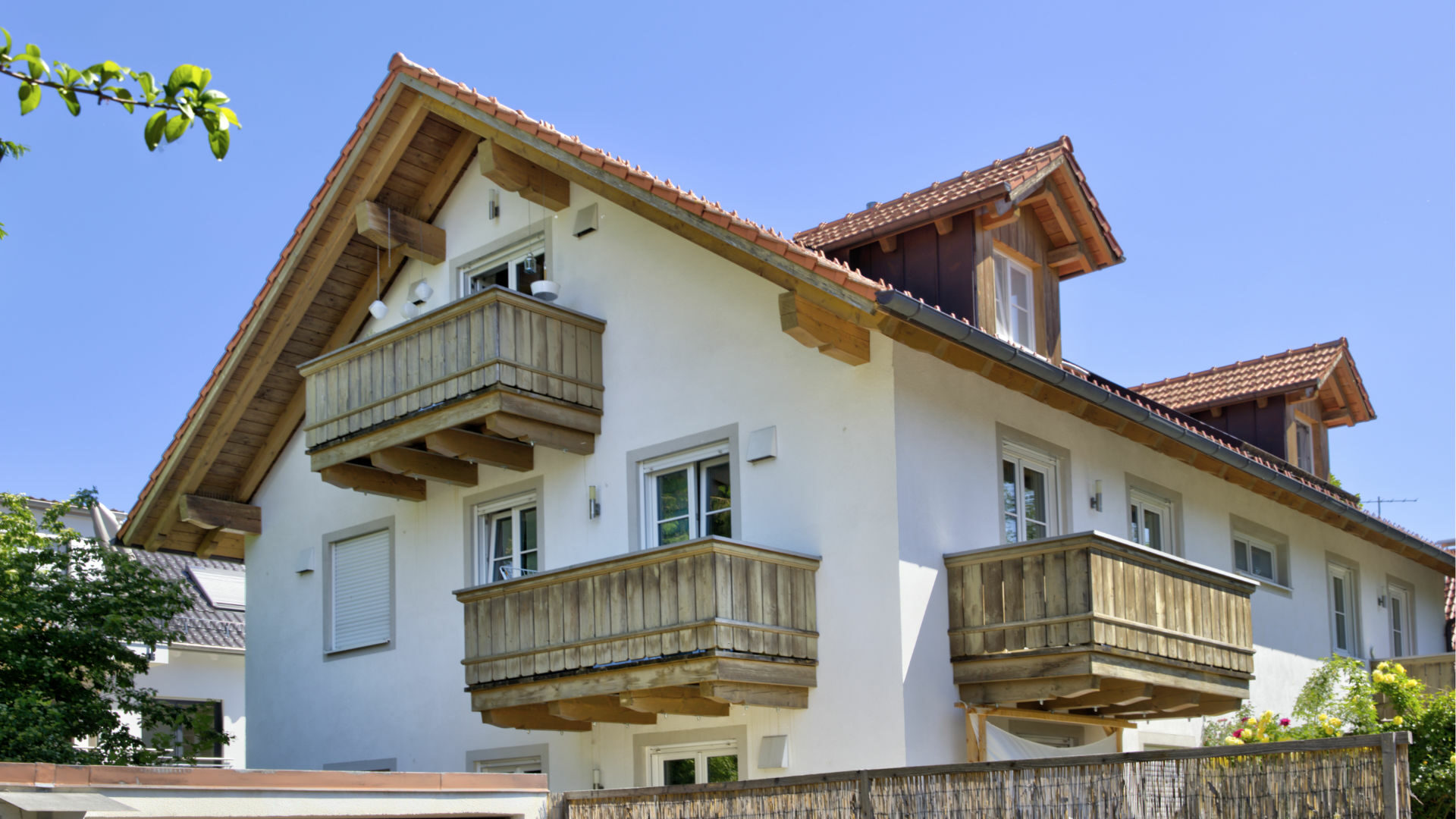
Balcony power plants, also known as mini photovoltaic systems or plug-and-play solar panels, are small, compact solar systems that can be installed on balconies, patios, or facades. They make it possible to consume self-generated solar power directly and thereby reduce electricity costs. Previously, however, the installation of balcony power plants in Germany was tied to strict regulations and legal hurdles. Now, the installation of balcony power plants is to be legally facilitated in order to further promote the use of renewable energies and support the energy transition.
New bill: Plug-in solar devices for tenants and apartment owners in planning
Soon, it could become easier for tenants and apartment owners to install plug-in solar devices on their balconies, as a draft bill by the Federal Ministry of Justice provides for a legal right to do so. Currently, there are many legal hurdles that often lead to disputes in court.
The Federal Ministry of Justice wants to make the installation of plug-in solar devices, also known as balcony power plants or mini solar systems, easier for tenants and condominium owners. They are to be given the legal right to install such devices.
The draft was submitted for inter-ministerial coordination on May 24, 2023. When the law will be discussed in the cabinet is still unclear. These plans are part of the federal government's photovoltaic strategy, which is to be implemented in 2023. In addition, the CDU/CSU parliamentary group has presented a bill for the faster expansion of balcony power plants.
Mini solar systems: Install easier and faster
The present „Draft Bill on the Approval of Virtual Condominium Owners“ Meetings, the Facilitation of the Use of Plug-in Solar Devices, and the Transferability of Limited Personal Easements for Renewable Energy Plants" contains planned amendments to both the Condominium Act (WEG) and the Civil Code. These amendments are intended to help promote the use of renewable energies and facilitate access to environmentally friendly technologies, such as plug-in solar devices.
Furthermore, the draft aims to enable the organization and holding of homeowners' meetings in a virtual format in order to meet the needs of today's digital society.
Plans are underway to include plug-in solar devices in the list of privileged structural alterations pursuant to Section 20, Paragraph 2 of the German Condominium Act (WEG), giving condominium owners a legal entitlement to them. Similarly, in tenancy law pursuant to Section 554, Paragraph 1 of the German Civil Code (BGB), the list of structural measures for which tenants can claim approval is to be expanded. This would eliminate the need to submit and justify a separate application for the installation of plug-in solar devices to the landlord or the owners' meeting.
The draft emphasizes that the proposed changes mean less effort compared to the current regulations. Greater time savings are expected, particularly for residential property, since the installation of plug-in solar devices often requires extensive discussions in current homeowners' meetings.
In addition, the Ministry of Justice intends to use the same law to simplify the holding of virtual condominium owners' meetings. These are to be allowed to take place if at least three-quarters of the owners agree. This is intended to increase the flexibility and efficiency of such meetings in order to better meet the needs of the owners.
Balcony Power Plants – The Current Legal Situation
Currently, the legal hurdles for small photovoltaic systems on balconies and terraces are quite high, and they frequently lead to legal disputes. To avoid conflicts with landlords, homeowners associations (WEG), or neighbors, tenants and apartment owners should heed certain advice.
Limits and registration requirements for balcony solar power
When generating solar power on balconies, the law stipulates that the output must not exceed 600 watts. In addition, owners of balcony power plants must in some cases register with the Federal Network Agency's Market Master Data Register (MaStR) and with the responsible distribution grid operator. It is important to note that neither owners nor tenants automatically have the right to operate a balcony power plant.
Approval for balcony power plants by landlord or apartment owners' association and structural changes
The necessity of informing landlords about a photovoltaic system or obtaining their consent depends crucially on where the modules are installed. Experts advise talking to the landlord or the homeowners' association before purchasing and obtaining written permission. If the system is installed on the balcony railing, the outer wall, or the roof, this is considered a structural alteration. In this case, the consent of the landlord or the homeowners' association is required, with a simple majority being sufficient for the latter.
The lease may already contain information on whether solar panels are permitted on facades or balconies and whether approval is required. Certain conditions may be specified, such as installation by a specialist company or proof of the balcony's load-bearing capacity. Approval is also necessary if a new socket must be installed or the electricity meter must be replaced to operate the system, as this constitutes an intervention in the electrical installation.
Contact us – we are always available


Inconsistent rulings in court cases regarding balcony photovoltaics
In most legal proceedings dealing with plug-in solar devices, there are two main reasons for discrepancies:
- Missing permission from landlord or homeowners association
- Visual impairment of the building facade
The verdicts in such cases are often inconsistent, which makes the legal situation more complex.
Structural changes: Impact on the facade
In the past, courts have ruled differently, as is explained in such cases. For example, in February 2023, the Local Court of Constance (Baden-Württemberg) ruled in favor of a homeowners' association because the small solar system installed by the owners on the balcony negatively affected the appearance of the facade. It is clear that structural changes require the consent of the owners. (AG Konstanz, judgment of February 2, 2023, docket no. 4 C 369/22)
Safety guidelines for solar panels on balcony railings
A tenant of a housing cooperative in Ilmenau (Thuringia) installed solar panels in an unconventional manner above the balcony railing, which violated applicable regulations. Despite clear court rulings, he refused to dismantle the system, which ultimately led to an eviction lawsuit. To avoid such situations, it is advisable to obtain permission from the landlord before purchasing a balcony power plant. This ensures that the installation complies with safety regulations and prevents legal issues.
Right to removal: only with legitimate cause
In a similar case in Stuttgart, a female landlord opposed the installation of a balcony power plant by her tenants. Nevertheless, the tenants put the system into operation, whereupon the landlord sued for removal at the Stuttgart Local Court (Baden-Württemberg) and lost the lawsuit. Although the landlord would fundamentally have a claim to the removal of the system if her consent is lacking, a valid reason would have to exist for this.
The court found that the facility in question was permitted under building law, visually unobtrusive, easily removable, and professionally installed without impairing the rented property. Furthermore, the facility was considered advantageous with regard to the politically desired energy transition. Due to these circumstances, the court ruled that the landlady had to tolerate the installation.
(AG Stuttgart, judgment of March 30, 2021, docket no. 37 C 2283/20)
Beware of glare from solar panels
The glare effect of solar panels should not be neglected either. In a case from Neustadt (Rhineland-Palatinate), a married couple did not have to remove their mini solar system on the orders of the Frankenthal Regional Court (LG), but did have to realign it to reduce the glare (LG Frankenthal, judgment of Aug. 12, 2022, ref. 9 O 67/21).
More independence through self-generation of electricity
Plug-in solar devices make it possible to use environmentally friendly solar power directly in your own home. They help contribute to independence from external power sources and support a sustainable energy supply.
A plug-in solar device consists of a solar module that converts sunlight into electrical current. An inverter converts this current into the electricity suitable for household appliances. Afterwards, the device is connected to the electrical circuit in the apartment. As a result, the generated solar power flows to the electrical appliances, and less electricity is needed from the public grid.
Conclusion
Starting in May 2023, legal simplifications are intended to promote the installation of plug-in solar devices. These mini photovoltaic systems make it possible to directly use self-generated solar power and reduce electricity costs. Previously, strict regulations and legal hurdles were an obstacle, but a new bill by the Federal Ministry of Justice plans to dismantle these hurdles and support the use of renewable energies.
The draft includes amendments to the Condominium Act and the Civil Code to facilitate access to eco-friendly technologies, such as plug-in solar devices. Condominium owners and tenants are to be granted a legal right to install such devices. In addition, the organization and holding of condominium owners' meetings in a virtual format is to be made possible.
Currently, the legal hurdles for balcony power plants are high and often lead to legal disputes. The planned changes are intended to reduce the effort and allow for greater time savings. With the planned legal simplifications, balcony power plants could play a greater role in the energy transition in the future.
Energy performance certificate mandatory for sale & rental
Share


Download as PDF

Print page

Would you like to know the value of your property? Free and without obligation.
Would you like to know the current value of your property? You've come to the right place for informed value assessments. Call us: 089 70065020.
Our property valuation for you:
- A high-quality and comprehensive analysis of your property.
- Well-founded real estate valuation including market analysis.
- Ideal for owners, sellers, and buyers.